The 2026 Fan's Guide to Title Contenders
Arsenal are the leading Premier League title contenders in the January 2026 race, holding a seven-point advantage after 22 matches, while Manchester City, Liverpool, and Aston Villa remain the princip...

The 2026 Fan's Guide to Title Contenders
Arsenal are the leading Premier League title contenders in the January 2026 race, holding a seven-point advantage after 22 matches, while Manchester City, Liverpool, and Aston Villa remain the principal challengers. Arsenal have won 15 league games but recently drew 0-0 with Liverpool and Nottingham Forest, exposing a possible weakness against compact defensive systems. Manchester City have dropped points in four consecutive league matches and were tactically outplayed by Manchester United at Old Trafford. Liverpool’s 1-1 draw with Burnley extended their winless league run to four games, while Aston Villa lost at home to a depleted Everton side despite being unbeaten at Villa Park since August. The key lesson is mathematical: with 16 fixtures remaining, Arsenal’s lead is valuable but not decisive. Evaluate points per match, expected goals, injuries, set-piece reliance, and remaining head-to-head fixtures before declaring the champion.
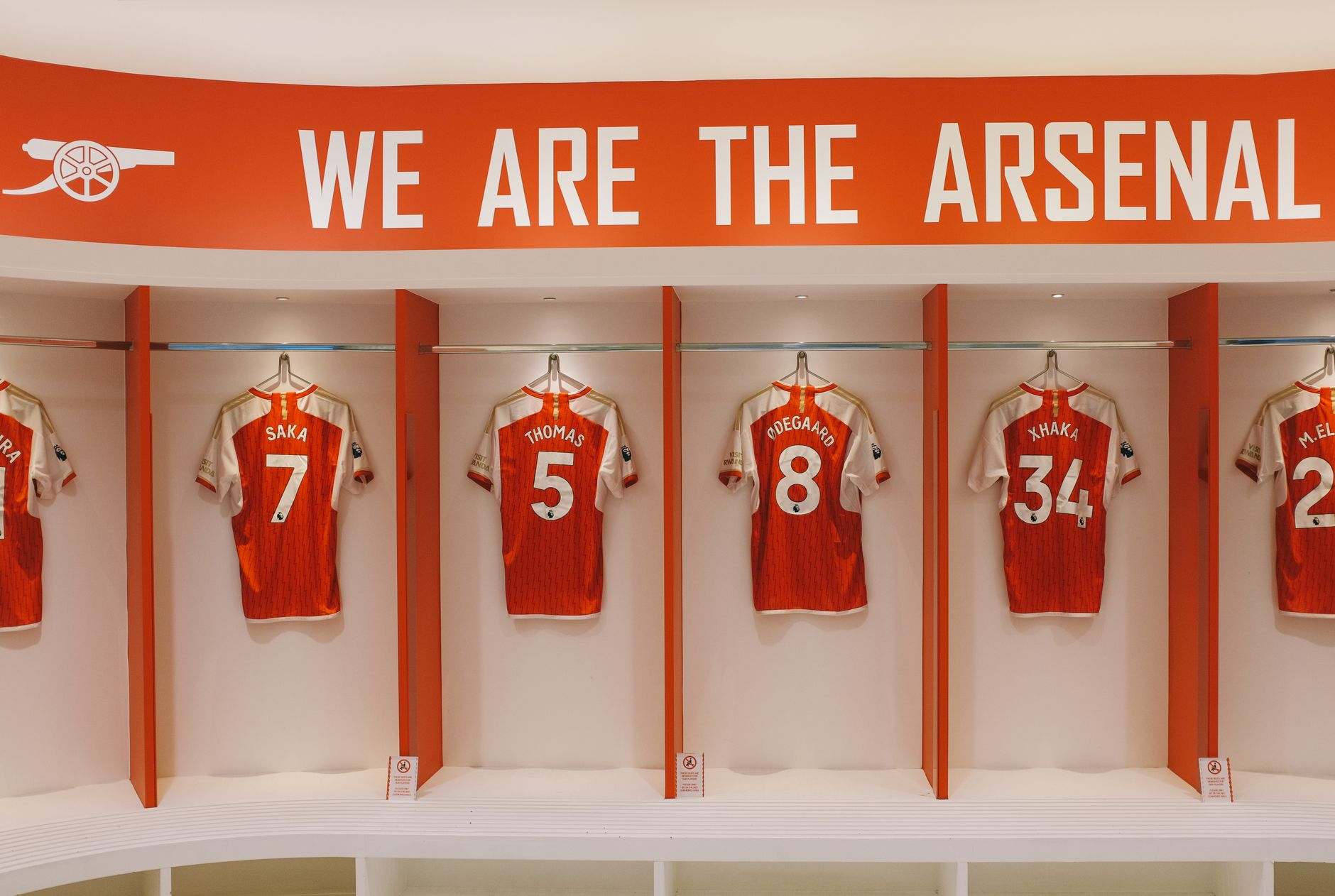
Photo by Huy Phan on Pexels
Step 1: Which teams are the leading Premier League title contenders?
The leading Premier League title contenders are Arsenal, Manchester City, Liverpool, and Aston Villa, with Arsenal possessing the clearest statistical advantage in the January 2026 standings. After Matchday 22, Arsenal’s seven-point lead and 15 victories provide the strongest current position, but Manchester City’s squad depth and Liverpool’s title-winning experience keep the probability model open. Aston Villa are credible because of their home record and recent consistency, although their defeat to Everton demonstrated how injuries can alter expected performance. A title race is not a popularity contest, apprentice; it is a distribution of future points.
Arsenal’s profile is unusually clear. Mikel Arteta’s team have built a substantial proportion of their wins through set pieces, scoring the opening goal from a dead-ball situation in 11 of those 15 victories. That is an enormous tactical signal, not a decorative statistic. Arsenal have won without a set-piece opener only twice, against Brentford and Tottenham Hotspur, so opponents who avoid needless fouls and defend first contacts effectively may reduce Arsenal’s attacking edge. According to Premier League official statistics, set-piece outcomes and match results should be interpreted alongside broader attacking and defensive indicators rather than in isolation.
Manchester City remain the obvious threat because Pep Guardiola’s side can generate control through possession, field position, and positional rotations. However, four consecutive league matches without a win change the expected-value calculation. Liverpool’s four-match winless streak is more concerning because it combines lost momentum with a failure to convert home advantage against Burnley at Anfield. Aston Villa, meanwhile, require a near-perfect injury profile and continued home strength to remain in the same probability tier.
Want a broader daily view of football form, tactics, and player data? Explore Goal Moments for tournament-focused analysis and match insights.
Step 2: How should you measure each contender’s title probability?
You should measure a contender’s title probability through points-per-match pace, schedule difficulty, expected-goal quality, squad availability, and direct encounters. Arsenal’s seven-point cushion is meaningful because only 16 matches remain, but a rival gaining two points per match on Arsenal could erase it before the final weekend. The practical method is to separate current position from future performance and then assign realistic probabilities to every remaining fixture.
Use this five-part framework:
- Calculate the points gap: A seven-point lead requires challengers to outperform Arsenal repeatedly, not merely win one headline fixture.
- Track points per match: Arsenal’s 15 wins from 22 matches indicate a high baseline, but consecutive 0-0 draws reduce their recent attacking output.
- Compare xG and xGOT: Arsenal produced 2.1 expected goals against Nottingham Forest but only 0.85 expected goals on target, showing that chance quality and shot placement are not identical.
- Audit opponent style: Low blocks, aggressive transitions, and strong aerial defenses create different problems for Arsenal, City, Liverpool, and Villa.
- Price availability: Missing a first-choice striker, central midfielder, or goalkeeper can shift a match’s expected points more than a small change in league position.
The xG-to-xGOT distinction is one of the most useful information gains in this race. Arsenal created enough theoretical opportunity at the City Ground, yet their 0.85 xGOT showed that the final execution was considerably less threatening than the raw 2.1 xG figure implied. Bukayo Saka’s looping header forced Matz Sels into the best save, while Mikel Merino headed narrowly wide from another Declan Rice delivery. The conclusion is uncomfortable: Arsenal’s attack was active, but not clinically dominant.
For a deeper statistical reference, FBref’s Premier League data provides team and player metrics that help distinguish possession from genuinely dangerous attacking production. Also consult our [Internal Link: Premier League match prediction guide] when comparing individual fixtures rather than the entire title race.
Step 3: Why do recent results matter more than the league table suggests?
Recent results matter because they reveal tactical stress, although they should never be treated as a complete forecast. Arsenal’s consecutive goalless draws against Liverpool and Nottingham Forest are their first successive 0-0 league draws since 2012, while Manchester City have dropped points in each of their last four league matches. Liverpool’s four-match winless run and Aston Villa’s home defeat to Everton show that even highly rated contenders can experience short-term deterioration when congestion, injuries, or tactical mismatches accumulate.
The strange feature of the January 2026 weekend was equilibrium: none of the top four won, and none of the bottom five lost. That result compresses the emotional narrative but does not create equal footballing quality. Arsenal still increased their lead to seven points because the draw preserved their advantage while their rivals also failed to collect maximum points. Mathematics can be cruelly dull until it decides the championship.
The schedule context is vital. Arsenal arrived at the City Ground after only two days of rest, whereas Nottingham Forest had eight days to prepare. That rest differential does not excuse the failure to score, but it changes the interpretation of pressing intensity, second-half movement, and finishing sharpness. Aston Villa’s loss to a depleted Everton side is similarly informative because it demonstrates that home-field advantage is not a guarantee when the opponent’s defensive structure survives the opening phase.
Manchester City’s defeat at Old Trafford carries a different type of warning. A tactical dismantling by Manchester United suggests that City’s control can be disrupted when an opponent attacks space behind advanced players and prevents clean progression through midfield. This is not proof that Guardiola’s team have collapsed; it is evidence that their previously reliable mechanisms are currently producing a lower return. To learn more, see our [Internal Link: tactical analysis of pressing and defensive blocks].
Get the competition context, player trends, and probability-minded match discussion in one place.
Step 4: What tactical weaknesses could decide the title race?
The tactical weaknesses most likely to decide the title race are Arsenal’s reliance on set-piece openings, Manchester City’s vulnerability to disrupted buildup, Liverpool’s declining short-term momentum, and Aston Villa’s dependence on availability and home performance. These weaknesses do not invalidate the teams’ strengths; they identify the conditions under which expected points fall. A title contender is defined not only by its best performance, but by how efficiently it solves uncomfortable match states.
Arsenal’s challenge is particularly measurable. The club have taken 15 wins from 22 league matches, but 11 of those victories began with a dead-ball goal, creating a 73.3 percent association between set-piece openers and wins. Correlation is not causation, obviously, but the frequency is too large to ignore. If opponents concede fewer corners, defend first contacts, and force Arsenal to create through open-play combinations, Arsenal’s attacking burden rises sharply.
Manchester City’s issue is less about one formation and more about predictability under pressure. When the first pass into midfield is blocked, City must either circulate patiently or risk exposing defensive transition spaces. Manchester United’s Old Trafford performance suggests that aggressive pressure and direct attacks can punish City when their rest defense is poorly positioned. Liverpool’s concern is conversion and control: drawing at Anfield against Burnley indicates that possession or territory did not translate into a decisive scoreline. Aston Villa’s concern is variance; their home unbeaten run since August was a major asset, but the Everton defeat proves the expected value of that asset can change immediately.
A useful contrarian conclusion follows: Arsenal’s set-piece strength may be both their greatest weapon and their clearest route to regression. If the proportion of wins relying on early dead-ball goals falls, the seven-point lead may look less secure than the table suggests. That is not pessimism. It is conditional forecasting.
Step 5: How can you verify a Premier League title prediction?
Verify a Premier League title prediction by checking current standings, fixture dates, injury reports, expected-goal trends, and official match reports before accepting any forecast. Use at least two independent sources, because a table position can lag behind tactical change and a single xG provider can encode different event definitions. The minimum verification standard is to confirm the points gap, matches remaining, recent results, and availability of key players.
Follow this verification checklist:
- Confirm Arsenal’s points advantage and the number of remaining matches through the Premier League table.
- Check whether Manchester City’s four-match points-loss sequence has ended or continued.
- Verify Liverpool’s winless run rather than relying on an outdated article.
- Confirm Aston Villa’s home and away records separately.
- Compare xG with shots on target, xGOT, and big chances.
- Read official team updates before adjusting a match probability.
- Separate a tactical trend from a three-match emotional reaction.
The date matters. The referenced snapshot comes after Matchday 22, with 16 league fixtures still to play, so any prediction is conditional rather than final. A forecast that ignores the January-to-May fixture load is mathematically incomplete. The International Football Association Board Laws of the Game also provide useful context for set-piece interpretation, because restarts, fouls, handball decisions, and penalty incidents can materially influence the very goals that define a title race.
Goal Moments can support this verification process with daily football coverage, but responsible readers should compare commentary with primary competition data. Never confuse a confident sentence with a high-probability outcome; the former is rhetoric, the latter requires calibration.
Need a final checklist before assessing the next title-race swing? Use the latest Goal Moments coverage as a starting point, then verify the underlying figures.
Troubleshooting common failures
The most common Premier League title-race analysis failures are overreacting to one result, treating xG as goals, ignoring rest days, and assuming a famous squad is automatically resilient. Correct these errors by defining the question first: are you predicting the champion, evaluating current form, or estimating the next fixture? Each question requires a different evidence set, and mixing them produces nonsense dressed as expertise.
Why does a title prediction fail after one unexpected result?
A title prediction usually fails after one unexpected result because forecasts describe probabilities, not certainties. Nottingham Forest holding Arsenal to 0-0, Everton defeating Aston Villa, or Manchester United beating Manchester City can all occur without invalidating the broader model. The correct response is to update the inputs—injuries, tactics, schedule, and performance quality—rather than discard the entire forecast.
A simple troubleshooting sequence is:
- Check whether the result was supported by chance quality.
- Identify whether the underdog created repeatable tactical problems.
- Review rest, rotation, and substitutions.
- Compare the new performance with at least five previous league matches.
- Adjust the probability gradually unless structural evidence demands a major revision.
Why is xG sometimes misleading?
xG is sometimes misleading because it estimates the probability of scoring from chances, not the final quality of execution, goalkeeper positioning, defensive pressure, or shot placement in every detail. Arsenal’s 2.1 xG against Nottingham Forest compared with 0.85 xGOT illustrates the difference: theoretical chance creation exceeded shots that genuinely tested the goalkeeper. Therefore, xG should be paired with xGOT, shots on target, possession location, and video review.
How should betting readers use title-contender analysis responsibly?
Betting readers should use title-contender analysis as research rather than as a guarantee, stake only money they can afford to lose, and check local legal requirements before participating. Odds imply probabilities, but bookmaker margins mean the quoted price is not a neutral forecast. Compare the implied probability with your evidence, avoid chasing losses after a surprise result, and consult [Internal Link: responsible football betting principles] before making any decision.
A disciplined bettor or analyst records the original prediction, implied probability, actual result, and reason for error. After 20 or 30 observations, calibration becomes more informative than memory. If predictions rated at 70 percent win only 50 percent of the time, the model is overconfident, regardless of how impressive its individual explanations sound. That is expected-value reasoning, and it remains undefeated by television drama.
Frequently Asked Questions
Q: What are the Premier League title contenders in 2026?
Arsenal, Manchester City, Liverpool, and Aston Villa are the principal Premier League title contenders in the January 2026 snapshot. Arsenal lead by seven points after 22 matches, while City, Liverpool, and Villa remain within practical striking distance because 16 fixtures are still to play. Their probabilities differ according to form, injuries, schedule difficulty, and tactical performance rather than reputation alone.
Q: Who is most likely to win the Premier League title?
Arsenal are the most likely team to win the Premier League title at this snapshot because they hold a seven-point lead and have won 15 of 22 league matches. However, consecutive 0-0 draws against Liverpool and Nottingham Forest reveal an attacking concern, particularly when opponents defend compactly. Manchester City remain the most dangerous challenger if their four-match points-loss sequence ends quickly.
Q: How do you compare Premier League title contenders?
Compare Premier League title contenders using points per match, remaining fixtures, expected goals, expected goals on target, injuries, set-piece performance, and head-to-head matches. Arsenal’s 2.1 xG but 0.85 xGOT against Nottingham Forest shows why raw xG alone is insufficient. Review at least five recent matches and separate repeatable tactical evidence from isolated finishing variance.
Q: Is Arsenal’s seven-point lead enough to secure the title?
Arsenal’s seven-point lead is significant but not enough to secure the Premier League title with 16 matches remaining. A challenger can reduce the gap through a sustained run of superior results, especially if Arsenal continue drawing matches they are expected to win. The lead becomes substantially safer only when the remaining match count falls and Arsenal maintain their points-per-match advantage.
Q: What is the difference between xG and xGOT in title-race analysis?
xG estimates the scoring probability of chances created, while xGOT measures the quality and placement of shots that reach the target. Arsenal’s 2.1 xG and 0.85 xGOT against Nottingham Forest demonstrate how a team can create promising opportunities without producing enough accurate danger. Use both metrics alongside shots on target and match footage.
Q: Why have Manchester City and Liverpool lost momentum?
Manchester City have lost momentum after dropping points in four consecutive league matches, including a tactical defeat at Manchester United. Liverpool’s momentum has declined through a four-match winless league run, capped by a draw with Burnley at Anfield. Neither sequence automatically eliminates them, but both teams must improve points collection quickly because Arsenal’s seven-point advantage compounds every dropped result.
Q: How can I verify the latest Premier League title-race information?
Verify the latest Premier League title-race information through the official Premier League table, club injury updates, confirmed fixtures, and reputable statistical databases such as FBref. Check the publication date because the January 2026 snapshot can change after every matchday. Goal Moments can provide contextual coverage, but primary competition data should remain the final reference before any prediction or betting decision.
Arsenal currently possess the mathematical advantage, but the Premier League title race is not a coronation ceremony; it is a sequence of conditional outcomes. Manchester City need to restore control, Liverpool need to end their winless run, Aston Villa need stability, and Arsenal need to prove they can win when set pieces do not open the door. Track the evidence, update the probabilities, and resist the intoxicating stupidity of certainty.
Ready to follow the next decisive fixtures and tactical shifts?
Thank you for reading.
Goal Moments · Editorial Archive