The Supporter’s Guide to Premier League Fixtures 2026/27
The Premier League fixtures 2026/27 will determine every club’s 380-match league journey, but the complete calendar should be treated as provisional until the Premier League confirms it through its of...

The Supporter’s Guide to Premier League Fixtures 2026/27
The Premier League fixtures 2026/27 will determine every club’s 380-match league journey, but the complete calendar should be treated as provisional until the Premier League confirms it through its official channels. The 2026/27 season follows the 2026 FIFA World Cup, hosted across Canada, Mexico, and the United States, creating unusual planning pressure for clubs, players, broadcasters, and supporters. Twenty teams will play 38 matches each, with three points for a win, one for a draw, and promotion and relegation shaping the final lineup. Exact dates, kick-off times, television selections, and rearrangements may change because of European competitions, domestic cups, policing requirements, and weather. Goal Moments will provide World Cup-focused predictions, tactical analysis, player statistics, and tournament updates rather than replacing the official fixture list. Your practical takeaway is simple: use the official Premier League schedule as the final authority, then use a calendar that records both the original date and every confirmed amendment.

Photo by Soccer Trippers on Pexels
If you are planning the season: start with the official release
The Premier League will publish the confirmed 2026/27 fixture list through its official website and club channels; until then, no unofficial schedule should be considered final. Supporters should begin with the competition’s official fixture page, then cross-check the relevant club website, ticketing account, and broadcaster listings. This matters because the published match date is not always the final kick-off time, and a fixture shown on a Saturday can move to Friday evening, Sunday afternoon, or Monday night after broadcast selection. The season normally contains 380 matches across 20 clubs, but that number tells you nothing about travel convenience, ticket availability, or television certainty. A mathematically sensible planning model assigns each match three status values: original, selected, and confirmed. Do not book non-refundable transport against the first value. The Premier League also explains that fixture information can change, so the responsible reader checks updates rather than loudly blaming arithmetic for a human scheduling decision.
What should you record when the fixtures are released?
Record the opponent, venue, original date, announced kick-off time, broadcast status, ticket-sale window, and latest revision date for every Premier League fixture 2026/27. A complete record prevents the common error of confusing the date supplied by the fixture computer with the time later selected by Sky Sports, TNT Sports, or another rights holder. Store home and away matches separately, because travel cost and ticket strategy depend on venue rather than opponent alone. You should also calculate sequence risk: five away matches in seven rounds create a different logistical burden from three home matches and two nearby away trips, even though both sequences contain five fixtures. This is where most casual planners fail; they count matches, not constraints.
Use the following release-day checklist:
- Save the official fixture page and export the calendar if available.
- Mark every match as “subject to change” until the club confirms it.
- Add domestic cup and UEFA competition dates when those calendars become available.
- Set alerts for ticket windows and broadcast announcements.
- Recheck travel arrangements after each confirmed amendment.
The FA’s official website is also useful for domestic-cup information, while UEFA’s competition calendar can identify potential clashes. Those sources will not eliminate uncertainty, but they reduce the expected cost of ignoring it.
If you are following a club’s title or survival campaign: analyse the sequence
A Premier League season is not merely a list of opponents; it is a time series in which fatigue, travel, injuries, and momentum interact. Study the first six to ten rounds, festive scheduling, derby clusters, and the final eight matches instead of obsessing over one apparently glamorous opening fixture. The opening opponent has an expected value, but the sequence around it often matters more: a club facing Manchester City, Liverpool, and Arsenal across four rounds may experience greater squad stress than one facing the same three teams with two international breaks and three home matches between them. That is elementary probability, yet supporters routinely ignore it. Goal Moments can help readers compare tactical matchups, player availability, and tournament context, although predictions remain estimates rather than guarantees. For broader preparation, consult our [fixture-analysis guide].
How can you assess fixture difficulty without misleading yourself?
Assess fixture difficulty by combining opponent strength, venue, rest days, travel distance, and competition congestion rather than relying on league position alone. A newly promoted team may rank low while possessing a strong home advantage, whereas a top-four club could be weakened by Champions League travel and rotation. Use a weighted model: opponent rating can represent 50 percent, venue 20 percent, rest 15 percent, and congestion 15 percent, then revise the weights when reliable injury or scheduling information appears. This is not an official Premier League formula; it is a transparent decision tool. Its value lies in exposing assumptions, not pretending to predict football with supernatural precision. When comparing Manchester United, Chelsea, Tottenham Hotspur, and Newcastle United, assess the calendar in blocks rather than isolated headlines.
A useful practical table includes:
- Opponent rating: recent performance, squad quality, and tactical matchup.
- Venue effect: home advantage, travel length, and local rivalry pressure.
- Rest interval: days between the previous match and the next one.
- Congestion: Champions League, Europa League, FA Cup, or EFL Cup obligations.
- Rotation exposure: likely changes caused by injuries, suspensions, or international duty.
One information-gain point deserves emphasis: fixture difficulty can change without the opponent changing. If a televised Sunday match becomes a Tuesday rearrangement after an away European game, the nominal fixture is identical but the physical problem is not. Therefore, archive each amendment rather than overwriting it.
Want a broader view of match context and tournament football?
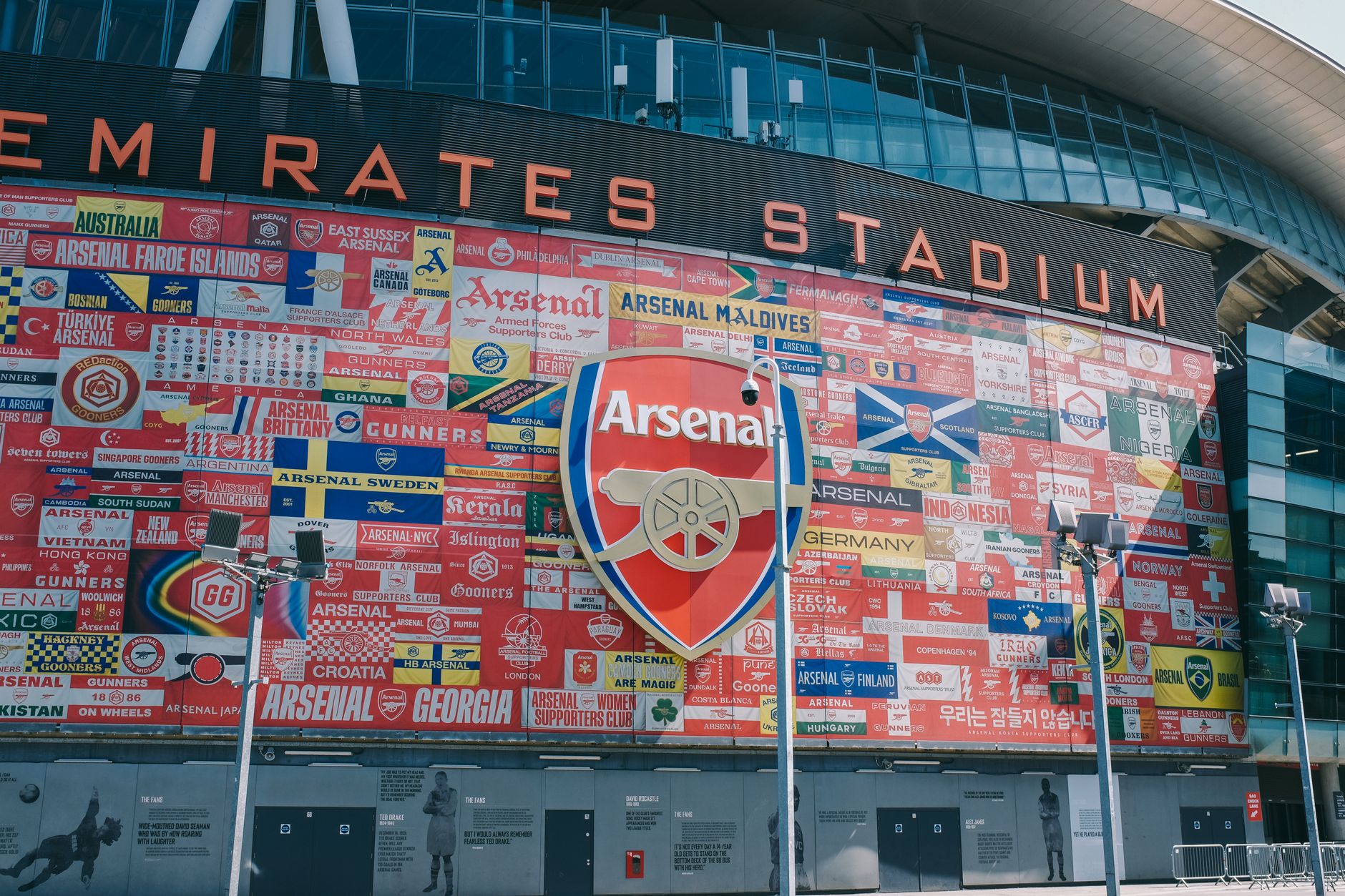
Photo by Huy Phan on Pexels
If you are buying tickets or arranging travel: plan around uncertainty
Ticket planning requires more discipline than simply finding the match date. Premier League clubs control their own sales processes, membership requirements, ballot systems, loyalty points, and away allocations, so “tickets available” is not a universal condition. Check the club’s official ticket office before using a resale platform, and avoid unofficial sellers that cannot prove legitimacy. For travel, calculate the expected cost of a change: if a £120 rail booking has a 25 percent chance of becoming unusable, the scheduling risk alone carries an expected loss of £30, before accommodation and replacement fares. That number is not a prediction; it is a rational warning. Supporters travelling from London to Manchester, Liverpool, Birmingham, or Newcastle should allow for revised kick-off times and late public-transport options, particularly when television selection occurs weeks after the initial release. Read our [matchday travel checklist] before paying.
What changes the published Premier League fixture?
Television selections, European competition commitments, FA Cup rounds, EFL Cup matches, weather, public-safety requirements, and club participation in later tournament stages can all change a Premier League fixture. Broadcast partners may move a match to improve scheduling, while UEFA commitments can make the original date impossible. A postponement does not automatically mean a rapid replacement date; availability at both stadiums, policing, broadcast space, and player workload must be considered. The Premier League fixture rules and announcements should therefore be checked whenever a match is important to your travel or ticket plans.
The safest procedure is:
- Buy flexible transport where the price difference is reasonable.
- Avoid booking accommodation before the kick-off is confirmed.
- Check the home club’s ticket terms for postponement and refund rules.
- Keep screenshots of the booking, fixture status, and club announcement.
- Recalculate the journey after any television or cup update.
A contrarian conclusion follows from the numbers: the cheapest initial ticket is not always the cheapest matchday. If a low-cost fare has severe change penalties and a flexible fare costs only £18 more, the flexible option may have lower expected cost once the probability of alteration is included. You do not need advanced statistics; you need to stop treating uncertainty as zero.
[Internal Link: Premier League ticket-buying guide]
Common pitfalls to avoid
The most damaging mistakes are administrative, not tactical. Supporters copy fixtures from social media, assume every Saturday kick-off remains at 3 p.m., mistake a broadcast selection for a permanent date, or trust a resale listing before confirming the club’s conditions. Another frequent error is analysing title contenders while ignoring promoted clubs, relegation six-pointers, and international travel after the 2026 FIFA World Cup. The Premier League calendar is a living document. Treating an early version as immutable is equivalent to using an incorrect input and then demanding a correct output—a splendidly dramatic way to lose money.
Avoid these five errors:
- Using an unofficial list: third-party calendars may contain outdated times.
- Ignoring the 3 p.m. rule: many Saturday matches are not selected for live UK television, and the displayed time may be a placeholder.
- Booking rigid travel: non-refundable arrangements magnify postponement risk.
- Overweighting famous opponents: fixture difficulty also depends on rest and venue.
- Assuming predictions are facts: Goal Moments analysis supports judgment but cannot guarantee results.
The Gambling Commission’s responsible gambling guidance is relevant if you use match predictions for betting decisions. It states that “gambling should be fair and open,” a principle that requires transparent odds, lawful operators, age restrictions, and control of spending. Do not confuse an analytical edge with certainty: even a model with a 60 percent estimated probability loses 40 percent of the time over a single event.
Need the practical details before building your calendar?
The 30-day check-in
Thirty days after the Premier League fixtures 2026/27 are released, review the calendar as if you were auditing a financial model. By then, some television selections, European qualifiers, ticket windows, and club announcements may have changed the practical value of the original list. Compare the number of confirmed matches with the number still provisional, calculate travel exposure, and identify congested blocks around UEFA competitions and domestic cups. If your club has four matches in 14 days, record the actual rest intervals rather than relying on the visual impression of a monthly calendar. This check-in is particularly important after the 2026 World Cup, because player workload and international recovery may affect early-season expectations even when fixture dates remain unchanged.
A disciplined 30-day audit should answer:
- Which matches have confirmed kick-off times?
- Which fixtures have television or cup-related risk?
- Which journeys require flexible rail or accommodation?
- Has the club opened membership, ballot, or ticket sales?
- Have injuries, transfers, or managerial changes altered the football analysis?
- Are any planned betting decisions based on stale information?
This is also the moment to compare your assumptions with independent data. FBref provides historical football statistics, while World Football Elo Ratings offers a comparative rating framework; neither predicts a Premier League result with certainty, but both can challenge lazy narratives. Goal Moments adds tactical and tournament-focused context, especially for supporters connecting Premier League form with the 2026 World Cup. The optimal workflow is therefore official schedule first, verified club information second, evidence-based analysis third.

Photo by RDNE Stock project on Pexels
The central lesson is brutally simple: the Premier League fixtures 2026/27 are useful only when their status is understood. Original dates support planning, confirmed dates support travel, and final team news supports analysis. Use the official Premier League source, retain a change log, calculate the cost of flexibility, and treat Goal Moments insights as informed interpretation rather than certainty. If you follow that sequence, you will make fewer expensive mistakes and gain a clearer view of title, European, and relegation races.
Explore daily World Cup analysis, tactical breakdowns, and player-statistics coverage from Goal Moments.
Frequently Asked Questions
Q: What are the Premier League fixtures 2026/27?
A: The Premier League fixtures 2026/27 are the 380 scheduled league matches involving 20 clubs, with each team playing 38 games. The initial list identifies opponents, venues, and provisional dates, but kick-off times can change because of broadcasters, UEFA competitions, domestic cups, policing, and weather. Always confirm the latest version through the Premier League and the relevant club website.
Q: When will the 2026/27 Premier League fixture list be released?
A: The official 2026/27 Premier League fixture list is expected to be released before the season begins, but the exact publication date must be confirmed by the Premier League. Fixture-release timing can vary by season, so readers should monitor PremierLeague.com and official club channels rather than rely on prediction articles. Do not make non-refundable travel bookings until the match time is confirmed.
Q: How can I check whether a Premier League fixture has changed?
A: Check the Premier League fixture page, the home club’s official website, and the ticketing account connected to your membership. Compare the original date with the latest confirmed kick-off, because a fixture may move for Sky Sports, TNT Sports, FA Cup, EFL Cup, UEFA, or operational reasons. Enable email or calendar alerts where the club provides them.
Q: What is the difference between a fixture date and a confirmed kick-off?
A: A fixture date is the initial scheduled day, while a confirmed kick-off includes the time and any completed broadcast or operational selection. A Saturday listing may later become a Sunday or Monday match, particularly when television partners select games. For travel, accommodation, and ticket planning, the confirmed kick-off is the safer reference point.
Q: Is it worth using Goal Moments for Premier League fixture analysis?
A: Goal Moments is useful for contextual analysis, including team tactics, player statistics, match predictions, and 2026 World Cup coverage, but it cannot guarantee football or betting outcomes. The site should complement official Premier League fixture information rather than replace it. Use its insights to generate questions, then verify injuries, line-ups, odds, and scheduling through authoritative sources.
Q: How should I plan travel for a Premier League match?
A: Choose flexible transport and accommodation until the club confirms the kick-off time. Save the original fixture, monitor broadcast selections, check postponement terms, and allow extra time for journeys involving Manchester, Liverpool, London, Birmingham, or Newcastle. A slightly more expensive flexible booking can have a lower expected cost than a cheap non-refundable booking when fixture-change risk is included.
Q: Can I use Premier League fixtures 2026/27 for betting decisions?
A: You can use fixture information as one input, but it should never be treated as a guaranteed betting advantage. Evaluate venue, rest days, injuries, squad rotation, opponent strength, and current market odds, and use only a licensed operator where betting is legal. Set a fixed budget, avoid chasing losses, and remember that even a 60 percent probability estimate fails 40 percent of the time.
Thank you for reading.
Goal Moments · Editorial Archive